Attend class at a specific time

UI/UX Bootcamp

Image
Smiling UI/UX designer working in an office
Cost
See Bootcamp registration page for details
Location
Schedule
Cohorts start monthly
Instructor

UI/UX Design Bootcamp equips you with the core principles, tools and industry best practices needed to excel in a variety of design roles. Our curated curriculum, drawn from top resources, guides you through design concepts, which you'll then apply in hands-on activities and comprehensive projects. These include UI practice exercises, a portfolio-ready capstone project and three optional projects to further hone your skills.

This fully online program empowers you to learn at your own pace, with the flexibility to accelerate your progress by dedicating more time each week. Benefit from personalized guidance through 1:1 mentor support via regular phone calls. Ask questions, receive feedback on your projects and gain valuable insights into the design industry.

  • Duration: 9 months
  • Ways to Learn: Online (Self-Paced)
  • Monthly cohorts offered, so you can choose to start your bootcamp when it's convenient for you.

Delivery Method
Customizable
Yes

Data Analytics Boot Camp

Image
Laptop showing charts and graphs on-screen
Cost
See Bootcamp registration page for details
Location
Schedule
Cohorts start monthly
Instructor

The Data Analytics Bootcamp empowers you with the essential technical skills for a thriving career in data analytics. Master business statistics, data visualization tools, and advanced analysis techniques to unlock valuable insights from raw data.

Our comprehensive curriculum goes beyond technical expertise, focusing on developing strategic thinking – a crucial skill for data professionals. With personalized support from mentors and career coaches, along with hands-on projects, you'll gain the confidence and practical experience needed to launch your career in this high-demand field. Learn at your own pace and on your own schedule, with the guidance and resources you need to succeed.

  • Duration: 6 months
  • Ways to Learn: Online (Self-Paced)
  • Monthly cohorts offered, so you can choose to start your bootcamp when it's convenient for you.
Delivery Method
Customizable
Yes

Spacesuit Training Course

Image
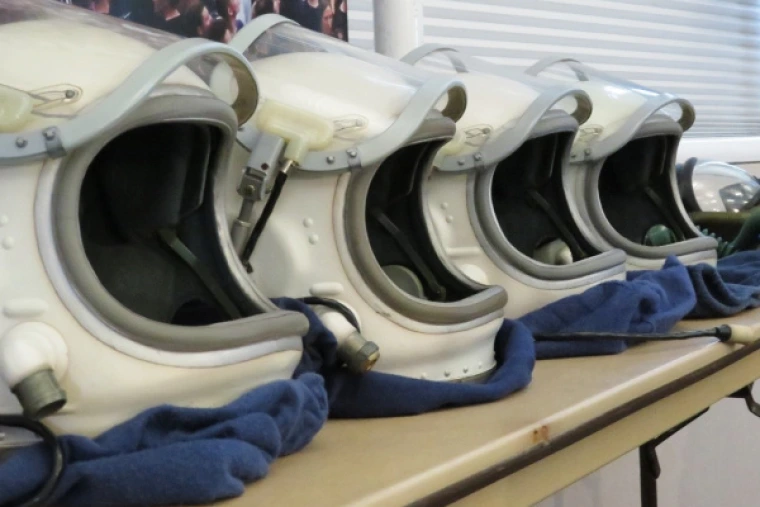
Space suit helmets sitting in a row
Cost
Varies based on course duration
Location
Schedule
See Schedule Below

The University of Arizona Biosphere 2 Center for Human Space Exploration (CHaSE) Spacesuit Training Course is an invaluable opportunity to gain comprehensive knowledge and expertise with spacesuits.

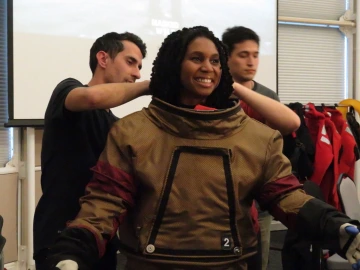
By the end of the course, participants will have had a thorough introduction to spacesuits and their operational protocols, including practical hands-on experience with donning (putting on), doffing (taking off) and pressurizing spacesuits safely and efficiently.

Image
Spacesuit training course students and instructor

What You Will Learn in the Spacesuit Training Course

Over one full classroom day, the course covers a brief history of suits, basic human physiology, and basic life support, as well as cleaning protocols for the suits.

During this time, you will gain a comprehensive understanding of the components and construction that make these complex systems.

Most importantly, you will also get fundamental hands-on experience with donning, doffing and pressurizing spacesuits.

What Is Included?

  • One full day of in-person training, including practical demonstrations and hands-on experience with donning, doffing and pressurizing spacesuits.
  • A non-credit certificate of completion from the University of Arizona’s Center for Human Space Exploration upon successful completion of the course. The certificate serves as evidence that the participant has completed all requirements for this professional development course.

Upcoming Classes

No classes currently scheduled. Contact us if you are interested in scheduling this class for a group.

Who Should Take the Spacesuit Training Course?

The course is open to individuals of all backgrounds with no prerequisites.

All participants will leave the course with a greater understanding of how to safely use and maintain these suit systems, enabling the next generation of space operations and exploration.
 

Delivery Method
Customizable
Yes
Career Level

Basic HACCP Training

Image
Food safety professionals working on a HACCP plan
Cost
$450
Location
Schedule
See Description

The University of Arizona Basic Hazard Analysis and Critical Control Point (HACCP) course equips food manufacturers, food safety professionals and food scientists/technologists with the knowledge and skills to develop and implement food safety programs.

The content of this course is accredited by the International HACCP Alliance.

Why Get HACCP Certification?

HACCP is the internationally recognized system to identify and manage food safety-related risk. HACCP addresses food safety through the analysis and control of physical, biological and chemical hazards, from raw material production to manufacturing, distribution and consumption. 

Federal food safety regulations for meat and poultry mandate that each manufacturer must rely on a trained individual who has received instruction in the application of HACCP principles. Those trained individuals must perform a periodic reassessment of the ongoing adequacy of the HACCP plan.

This course directly fulfills these regulatory expectations, as well as provides additional practical and technical instruction to assist food manufacturers in producing safe product.

Basic HACCP Classes

Basic HACCP is offered twice a year, in the spring and fall semesters.

Spring 2025 Class: May 13-14 (8 a.m.-5 p.m.), May 15 (8 a.m.-1 p.m.) 

Fall 2025 Class: September 16-17 (8 a.m.-5 p.m.), September 18 (8 a.m.-1 p.m.) - *Registration is now closed

Schedule: two full days and one half-day of live, in-person instructor-led training

Location: The Refinery @ The UA Tech Park, 1600 East Idea Lane, Tucson AZ

What You Will Learn

In the course, you will receive instruction in the seven principles of HACCP:

  • Hazard analysis
  • Critical control points
  • Critical limits
  • Monitoring
  • Corrective actions
  • Verification procedures, including validation
  • Record-keeping

Special attention will be placed on developing a HACCP plan, as well as when and how to conduct a record review.

You will also interactively spend time throughout the course solving problems about hazards and their control associated with meat, poultry, eggs, seafood, and juice products.

Who Should Attend HACCP Training?

This course is appropriate for anyone wanting to better understand HACCP, especially individuals who either are working or want to work in any aspect of food production, distribution, or preparation.  

There are no prerequisites for this course, and no application is required.

What is Included

  • Two and a half days of live training, taught by University of Arizona faculty experts
  • Opportunities to ask questions and get the individual feedback you need to master the material
  • All course materials
  • Lunches
  • Upon successful completion of the course, you will receive a certificate and seal from the International HACCP Alliance and a certificate of completion from University of Arizona Continuing & Professional Education

Instructors

The program is taught by Dr. Margie Sánchez-Vega, a University of Arizona Assistant Professor of Practice in Animal and Food Science with over 9 years of experience in food safety teaching.


Image
University of Arizona CALES Animal and Comparative Biomedical Sciences logo
Delivery Method

Food Safety Preventive Controls for Human Food

Image
Man working in a food factory
Cost
$700
Location
Schedule
See schedule below

The Current Good Manufacturing Practice, Hazard Analysis, and Risk-based Preventive Controls for Human Food regulation (referred to as the Preventive Controls for Human Food regulation) is intended to ensure safe manufacturing/processing, packing and holding of food products for human consumption in the United States.

The regulation requires that certain activities must be completed by a “preventive controls qualified individual” who has “successfully completed training in the development and application of risk-based preventive controls”.

This course developed by the Food Safety Preventive Controls Alliance (FSPCA) is the “standardized curriculum” recognized by FDA. Successfully completing this course is one way to meet the requirements for a “preventive controls qualified individual.”

Food Safety Preventive Controls Classes

June 17-19, 2025 (8 a.m.-5 p.m.) - registration for this class is now closed

  • Schedule: three full days of live, in-person instructor-led training
  • Location: The Refinery @ The UA Tech Park, 1600 East Idea Lane, 3rd Floor, Tucson, Arizona 85713

What You Will Learn

  • Introduction to preventive controls, food safety plans, Good Manufacturing Practices and other programs, and related regulations
  • Biological food safety hazards
  • Chemical, Physical and Economically motivated food safety hazards
  • Developing a food safety plan
  • Process, food allergen, sanitation and supply-chain preventive controls
  • Recall plans
  • Verification, validation and record-keeping procedures

Who Should Get Food Safety Preventive Controls Training?

This course is appropriate for anyone wanting to better understand food safety, especially individuals who work in or want to work in food production, distribution, or preparation.

The course will be particularly useful for individuals who will be involved in the preparation or analysis of food safety plans, validation of preventive controls or food safety record reviews.

There are no prerequisites for this course, and no application is required.

What is Included?

  • Three days of live, in-person training, taught by University of Arizona faculty
  • Opportunities to ask questions and get the individual feedback you need to master the material
  • All course materials
  • Lunches
  • Upon successful completion of the workshop, you will receive a certificate from the Food Safety Preventive Controls Alliance and a certificate of completion from University of Arizona Continuing & Professional Education

Discounts

A 50% discount is available for current University of Arizona students.


Instructor

These courses are taught by a Lead Instructor trained by the FSPCA who has been instructed in how to teach the FDA-recognized standardized curriculum: Dr. Margie Sánchez-Vega, a University of Arizona Assistant Professor of Practice in Animal and Food Science with over 9 years of experience in food safety teaching.


Image
University of Arizona CALES Animal and Comparative Biomedical Sciences logo
Delivery Method

Paralegal Certificate

Image
Paralegal standing in front of a courthouse
Cost
Up to $2,195 (plus books and materials)
Location
Schedule
See Description
Instructor
Subject
Course Type

Paralegal is one of the fastest growing careers in the country. The national median earnings for paralegals is over $50,000/year, and freelance paralegal professionals average significantly more across the board.

There are paralegal job openings in every state and in a wide variety of industries, making paralegal skills highly transferable. Law firms, government agencies, corporations, hospitals, the court system and many other employers hire paralegals.

The Paralegal Certificate Course© prepares you for a career in this fast-growing field.

What You Will Learn in the Paralegal Certificate Course

The Paralegal Certificate Course is designed to equip you with the knowledge of the American legal system that you need to begin a successful career as a Paralegal. It will also teach you practical skills including how to assist trial attorneys, interview witnesses, research the law, and assist in preparing cases for courtroom litigation.

You will also:

  • Develop a working knowledge of legal authority: how it is used and how to locate it through legal research.
  • Learn the basics of law office management, substantive law (such as criminal law, domestic relations, real property law, and bankruptcy), and informal and formal advocacy.

Who Should Take the Paralegal Certificate Course?

This is a non-credit professional development certificate designed to prepare you to start a career as a Paralegal.

The only prerequisites for participation in the program are: a high school diploma (or equivalent) and being 18 years of age. There is no application required.

To register for the program, click the Register for Class button below. On the registration page, you can choose a course format and the date you wish to start the program, purchase your books/materials, and pay your registration fee.

Class Schedule and Format: Choose a Format that Works for You

The Paralegal Certificate Course is available in two different formats:

  • In the online format, you will complete two seven-week online classes (Paralegal 1 and Paralegal 2). For each class, you will complete weekly activities and assignments, averaging 8-12 hours per week of course work. As long as you complete your work by the assigned deadline, you can work on your own schedule, and you don't need to be online at a particular time. View full online course syllabus.
  • The live lecture format is similar to the online format, but it is shorter (8 weeks) and therefore more intensive. You still complete weekly online activities and assignments. You will also attend live online lectures (via Zoom) three times per week. View full live lecture course syllabus.

Online course dates

Paralegal 1 and Paralegal 2 must be completed in consecutive sessions. The start and end dates dates below reflect the date you would start Paralegal 1 and the date you would complete Paralegal 2.

  • January 12, 2026 - February 27, 2026
  • March 9, 2026 - April 24, 2026
  • May 4, 2026 - June 19, 2026
  • June 29, 2026 - August 14, 2026
  • August 24, 2026- October 9, 2026
  • October 19, 2026 - December 4, 2026

Live lecture course dates: Attend live lectures (via Zoom) on Mondays and Wednesdays from 6:30-9:30 p.m. and Saturdays from 9:00 a.m.-1:30 p.m. Mountain Time.

  • Spring 2026: February 2 - March 28, 2026
  • Summer 2026: July 6 - August 29, 2026
  • Fall 2026: September 21 - November 14, 2026

Note: if a live lecture falls on a holiday, lecture may be rescheduled for another date.

What is Included

  • 90 clock hours of training
  • A Certificate of Completion from University of Arizona Continuing & Professional Education upon successful completion of the program. Update April 2021: this Certificate will be available in a downloadable digital format.
  • A digital badge upon successful completion of the program

Note: books and materials are not included in registration fee.

Delivery Method
Approved for Funding by
Career Level
Top Program

Meat Processing: Beef

Image
Meat processing student practicing at the University of Arizona Food Product and Safety Lab
Cost
$1,050
Schedule
See schedule below

The Beef Harvest and Carcass Fabrication course is a unique hands-on learning opportunity for those who wish to learn meat processing skills.

The course is designed and taught by University of Arizona Animal & Comparative Biomedical Sciences faculty, and it meets at the University of Arizona Food Product and Safety Lab (FPSL).

Image
University of Arizona Animal and Comparative Biomedical Sciences logo

The FPSL is a state of the art, USDA inspected processing facility that includes full harvesting facilities, processing and fabrication rooms, and interactive teaching and learning spaces. It is the only facility of its kind in the Southwest.

The course is limited to eight participants, to ensure each participant can derive maximum benefit from a hands-on portion of the course and interaction with the instructor.

Thanks to a generous grant from the USDA, we are able to offer a 50% discount on the course registration fee. The normal cost of this course is $2,100. Participants in this course will pay just $1,050. 

Who Should Take This Course?

Beef Harvest and Carcass Fabrication is focused on techniques used in very small to medium sized meat processing operations. 

This course is open to the public. You do not need to be a University of Arizona student to take the course. This course is open to anyone who wants to learn or improve their meat processing skills, including those who are:

  • Seeking employment in meat processing.
  • Starting a meat processing business.
  • A current meat processor who wants to improve their skills.
  • In a beef processing management position but want to know the hands-on skills.
  • Interested in learning beef processing skills for processing their own meat.

No prior experience is necessary; however, those with experience may also enroll to improve their skills.

What You Will Learn

The five-day course provides participants with the opportunity to gain practical skills in cattle harvest and carcass fabrication:

  • Cattle harvest, including humane harvest techniques and all steps in carcass dressing - two half-days (one observing, one hands-on)
  • Beef carcass fabrication, including bone-in and boneless techniques, retail cutting, and ground beef production - four days (hands-on)
  • Packaging and storage, meat color, sanitation, food safety, inspection, knife sharpening

Visit the registration page for additional details.

Schedule, Format and Location

This is a live, hands-on instructor-led course. The majority of the time will be spent practicing harvest and carcass fabrication skills.

Schedule: Five days, 8 a.m.-5 p.m. daily (some days may end at 6 p.m.). There will be a one-hour break for lunch each day.

Dates: May 12-16, 2025

Location: University of Arizona Food Product and Safety Lab (FPSL), Tucson

What is Included?

  • Five days of in-person hands-on training
  • Opportunities to ask questions and interact with instructors
  • Rubber boots, helmets, frocks, gloves, hairnets
  • Equipment (yours to keep) – boning knife, breaking knife, sharpening steel, scabbard
  • All course materials, necessary facilities and equipment
  • Certificate of participation/completion from University of Arizona Continuing & Professional Education

Not included: Lodging (the Homewood Suites by Hilton Tucson/St. Phillips Plaza University is just 0.5 miles from the FPSL) or food (there are several dining options close to the FPSL)

Lead Instructor

Dr. Duane Wulf
Director, Arid Lands Animal Production Center
Associate Professor, Animal and Comparative Biomedical Sciences
Member of the Graduate Faculty
 

Delivery Method
Career Level

Beekeeping for Beginning and Small-Scale Farmers

Image
Beekeeper working with a hive
Cost
$150
Location
Schedule
See schedule below
Subject

Beekeeping for Beginning and Small-Scale Farmers provides a hands-on, practical learning experience for small farmers, entrepreneurs and others interested in honey production and pollination.

Through a combination of lectures, discussions and hands-on practice, participants will learn fundamental and practical beekeeping and business skills.

Who Should Take This Course?

This program is designed for current and aspiring:

  • Urban farmers
  • Community garden organizers
  • Small and beginning farmers
  • Master gardeners
  • Market gardeners
  • Homesteaders
  • Entrepreneurs interested in honey production and pollination

No prior beekeeping experience is necessary. Beginning and experienced beekeepers who wish to expand their knowledge and skills are welcome.

Class Schedule and Location

Dates and schedule: March 6-May 8, 2025. Class meets 6-8 p.m. on Thursdays for lectures, 4-6 p.m. for field days. See schedule for details.

Location: Classes meet at the University of Arizona Cooperative Extension Office of Maricopa County and the People's Demo Farm.

Maricopa County Cooperative Extension & People's Demo Farm
4341 East Broadway Road
Phoenix, AZ 85040

What You Will Learn

The goal of this program is to help small-scale and beginner farmers diversify and sustain their operation by gaining knowledge in beekeeping, honey production, pollination and core business skills, including:

  • Equipment and protective gear
  • Bee species, anatomy, life stages, colony activities and more
  • Setting your colony up for success: Arizona state laws, locations, buying/acquiring and installing your honeybees
  • Feeding and managing your honeybees
  • Hive inspection
  • Diseases and pests
  • Acquiring queens, rearing queens, re-queening
  • Products of the hive: bees, honey, honeycomb, wax, pollen, propolis, royal jelly and value-added products made with honey
  • Honey extraction, straining and storing
  • Preparing products for market
  • The business of beekeeping: brand development, business planning, pricing, marketing and promoting your business

What is Included?

  • Live, instructor-led classes, workshop sessions and hands-on activities such as hive inspection, extracting honey, and installing a nucleus colony
  • All course materials
  • A Certificate of Completion, upon successful completion of the course

Instructors

The course is part of the University of Arizona Cooperative Extension Urban Agriculture Production, Small-scale, and Beginner Farmer Program, and it is taught by beekeeping experts, including Ayman Mostafa and Amanda Ohnmacht.

Image
University of Arizona Cooperative Extension Center for Urban Smart Agriculture


Delivery Method
Career Level